
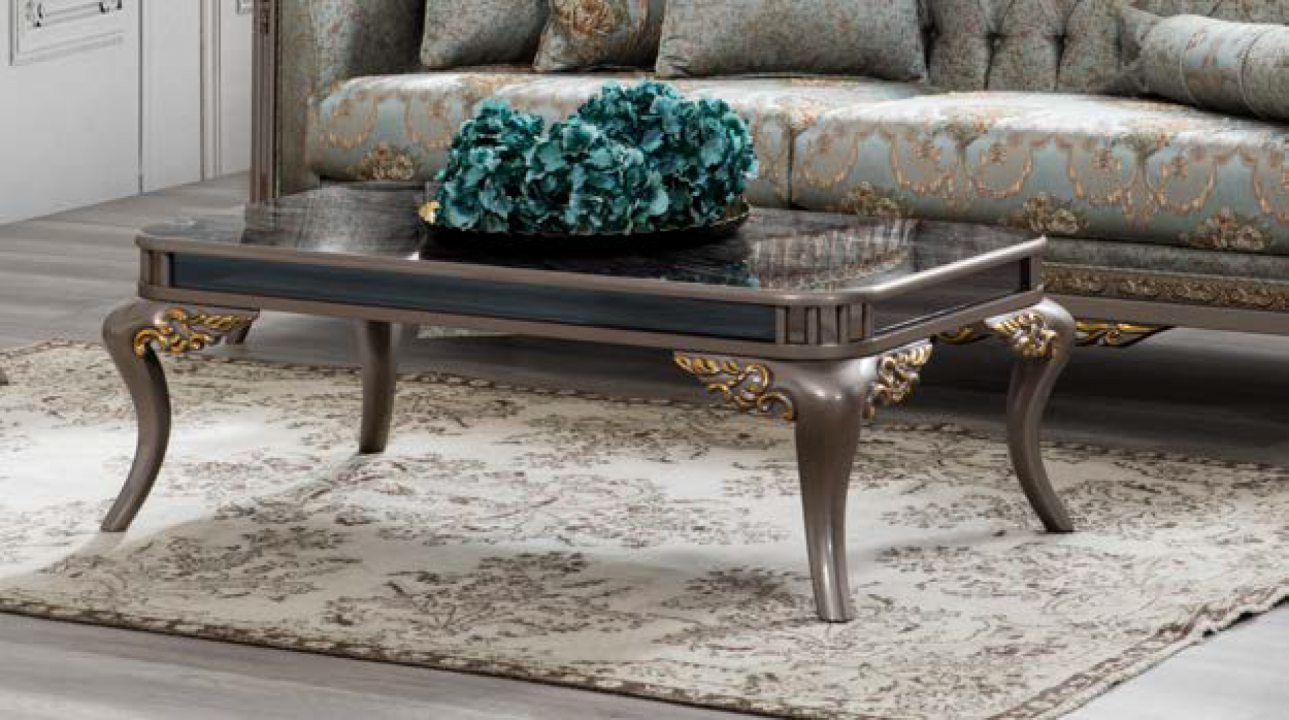
Classic Furniture Accessories in Living Room Decoration
Classic furniture accessories in living room decoration are used to establish visual harmony between sofa sets and other pieces while making the space more functional. Coffee tables, side tables, mirrors, vases, candleholders and decorative trays can complement the design details of classic furniture when used in appropriate proportions. However, accessories that are too large, numerous or incompatible with the room can make the interior appear crowded and disorganized.
Sarıçam Furniture’s coffee table and accessory collection includes models with different design characteristics. When examining these products, customers should consider their dimensions, height, intended use, surface properties and distance from the surrounding seating.
What Do Classic Furniture Accessories Add to a Living Room?
Classic furniture establishes the main character of a living room through wooden details, prominent lines and decorative surfaces. Accessories are smaller elements that complete this character. Repeating the wood, fabric or metal tones found in the furniture can create a connection between different areas of the room.
The purpose of using accessories is not to fill every available surface. Empty areas on a coffee table, sideboard or TV unit are also part of the design. Leaving some surfaces clear makes the furniture’s carving, finish and decorative details easier to see.
Instead of combining many highly decorative objects, using a limited number of pieces that complement the furniture generally creates a more balanced appearance. Accessories do not have to belong to the same collection. A shared color, material or motif can provide sufficient visual continuity.
How Should a Coffee Table Fit the Living Room Layout?
Because the coffee table is positioned at the center of the seating arrangement, it directly affects the overall layout. A table that is too large can restrict movement, while a model that is too small may appear disproportionate beside the sofa set.
There should be enough space between the coffee table and the seating for people to move comfortably. Users should be able to reach items on the table without difficulty, but they should not risk hitting it when standing up or walking through the room.
Classic coffee tables may feature decorative legs, carved sections and prominent details extending beyond the tabletop. Product dimensions should therefore be assessed according to the total area occupied by the table rather than the surface dimensions alone.
Sarıçam Furniture’s classic sofa sets include seating groups with different sizes and decorative features. When determining the coffee table dimensions, customers should consider the total width of the sofas, the position of the armchairs and the main circulation route through the living room.
Coordinating a Coffee Table with the Sofa Set
A coffee table does not need to be exactly the same color as the sofa set. What matters is harmony between wood tones, upholstery colors and metal details. For example, placing a noticeably cool wood tone beside warm walnut furniture can weaken the visual connection between the pieces.
If the sofa set has extensive carving and gilded details, a more restrained coffee table can balance the interior. If the sofa design is simpler, a table with decorative legs or a distinctive surface may serve as a focal point.
Cream, beige and light-colored sofas can be complemented by walnut, bronze or gold-toned details. If burgundy, navy blue or green upholstery is used, there is no need to repeat the same strong colors on every accessory. Neutral tables and decorative objects can help balance the overall palette.
If the dining and living areas share the same room, the classic dining room collection should also be included in the color plan. The dining table, sideboard and coffee table do not need to match exactly. Similar undertones and selected decorative details can create a natural transition.
Which Accessories Can Be Used on a Coffee Table?
Accessories should be selected according to the size and purpose of the table. If it is frequently used for serving, a significant part of the surface should remain clear. If it serves mainly a decorative purpose, a more structured arrangement can be created.
A decorative tray can group several small accessories in one area. A small vase, candleholder or lidded box may be placed inside the tray. Books can introduce different heights and provide a base for smaller objects.
Tall vases and large candleholders can obstruct the view of the television. These pieces may be more suitable for a side table or sideboard. In homes with children or pets, fragile accessories should not be placed near the edge of the table.
Using objects of different heights can create a more balanced arrangement. However, the surface should remain practical even when the number of decorative pieces is increased.
How Should Side Tables Be Used?
Side tables can be positioned beside sofas and armchairs for drinks, books, mobile phones and lighting. A height close to the armrest allows seated users to reach the table more comfortably.
In a narrow living room, several compact side tables may be more practical than one large coffee table. Movable models can adapt to different seating arrangements and be repositioned when necessary.
If a lamp will be placed on the side table, the location of the electrical outlet and the path of the cable should be considered. The lamp should be proportional to the table and stable enough to avoid tipping.
How Does a Mirror Affect the Living Room?
A mirror can serve both a practical and decorative purpose in a classic interior. When positioned correctly, it reflects natural and artificial light and can make the room appear brighter.
What the mirror reflects should be considered before installation. A reflection of an organized seating area, chandelier or decorative item can support the design. A mirror facing a cluttered section or the television screen may create an undesirable effect.
Large mirrors with classic frames can be used on wide walls. In a small living room, however, an oversized frame with heavy detailing may overwhelm the space. The mirror should remain proportional to the sideboard or furniture positioned below it.
Balancing Accessories on Sideboards and TV Units
Sideboards and TV units are frequently decorated because of their wide surfaces. Filling both surfaces completely, however, can make the living room look crowded.
A table lamp, vase and small decorative object may be used together on a sideboard. Instead of arranging everything at equal intervals, the accessories can be placed in balanced groups. If there is a mirror above the sideboard, the reflections of the objects should also be considered.
Tall accessories should not surround the television screen. They can distract the viewer and narrow the field of vision. The arrangement should also leave sufficient space for cables, remote controls and electronic devices.
Homeowners who want to create a classical television area can examine Sarıçam Furniture’s classic TV unit models. When coordinating the coffee table and TV unit, the ventilation requirements of electronic devices should not be overlooked.
Using Classic Accessories in Small Living Rooms
Classic furniture can be used in a small living room, but the number and dimensions of accessories should be controlled. A compact or movable coffee table may be more suitable than a large model. Wall mirrors can provide a sense of depth without occupying floor space.
Light-colored accessories and glass surfaces may help make the room appear more spacious. However, too many glossy or reflective surfaces can create excessive glare. The amount of natural light entering the room should be considered.
Instead of spreading small objects across every surface, grouping a few pieces on one decorative tray can create a more organized appearance. Accessories can be changed periodically to refresh the room without increasing their total number.
Accessory Placement in Large Living Rooms
In a large living room, accessories may be used on coffee tables, side tables, sideboards, shelving and wall surfaces. Nevertheless, having more space does not mean every section needs to be filled.
The room can be divided into different functional areas. A coffee table may serve the main seating group, a side table can complement a reading corner, and accessories can be placed on the sideboard in the dining area. Repeating selected colors or materials across these areas can create continuity.
Larger decorative objects can be used in a spacious room, but they should remain proportional to the furniture. A few properly sized accessories usually appear more balanced than many small objects scattered across broad surfaces.
Researching Classic Coffee Tables and Accessories in Major Cities
Customers looking for classic coffee tables and accessories in Istanbul, Ankara, Izmir, Bursa and Antalya should examine the dimensions, finish colors and functional features carefully. Colors shown in online photographs may vary because of lighting conditions and screen settings.
Customers in Istanbul can visit Sarıçam Furniture’s showrooms in Masko Furniture City. Examining a coffee table in person makes it easier to assess its stability, surface texture, actual color and compatibility with different sofa sets.
Customers researching products from Ankara, Izmir, Bursa or Antalya should confirm total dimensions, packaging and delivery conditions before ordering. Delivery to these cities should not be assumed; current information should be obtained directly from Sarıçam Furniture.
Common Mistakes When Using Classic Accessories
One common mistake is selecting every accessory in exactly the same color and pattern. An interior that is matched too precisely may appear unnatural. Using a common color or material while varying the shapes creates a more balanced result.
Another mistake is filling the entire coffee table with decorative objects. Since the table provides a practical serving surface, part of it should remain clear.
Accessories that are disproportionate to the room also create problems. A large vase can make a small table unusable, while very small objects may appear scattered on a wide sideboard.
Safety should not be ignored. Heavy pieces need stable surfaces, while tall accessories that can easily tip over should be kept away from passageways.
A Short Summary of Classic Furniture Accessories in Living Room Decoration
When using classic furniture accessories in living room decoration, dimensions, placement and function should be considered before the total number of items. Coffee tables and side tables need to support the seating arrangement, while accessories should complement the furniture’s colors and design details.
Mirrors, vases, decorative trays, books and candleholders can create visual continuity when used carefully. A balanced classical interior does not require every surface to be filled. Preserving clear areas and maintaining everyday functionality are essential.
Frequently Asked Questions
How many accessories should be used in a classic living room?
There is no fixed number. The dimensions of the room, the amount of furniture and the purpose of each surface should be considered. A limited number of coordinated objects is generally more effective than filling every available space.
Should the coffee table and sofa set be the same color?
No. The colors do not have to match exactly. Harmony between the wood undertones and decorative details is sufficient.
Can a coffee table be used in a small living room?
Yes. A compact model that does not obstruct movement and remains proportional to the seating can be selected.
What can be placed on a coffee table?
A decorative tray, vase, a few books, candleholder or small object may be used. Enough space should remain clear for everyday serving.
Where should a mirror be positioned in a classic interior?
A mirror can be placed where it reflects light and an organized part of the room. Its dimensions should be compatible with the sideboard or furniture below it.
What should be checked when choosing a classic coffee table?
The total dimensions, height, stability, connection points, surface craftsmanship and compatibility with the surrounding seating should all be examined.
 ARA
ARA
 CANLI DESTEK
 HARİTA