
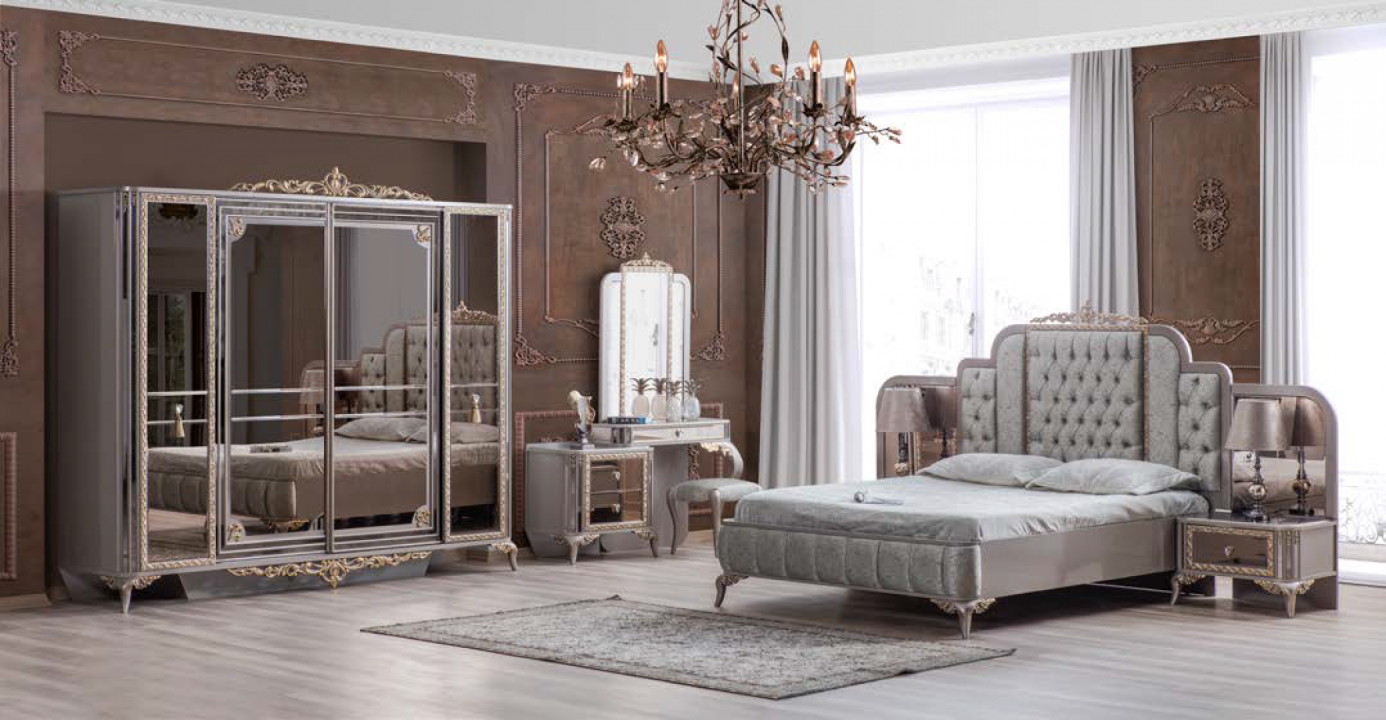
How to Create Harmony Between Wardrobes, Dressers, and Nightstands in Luxury Bedrooms
Harmony between wardrobes, dressers, and nightstands in luxury bedrooms is not achieved simply by choosing all three pieces from the same collection. Their dimensions, colors, materials, storage capacities, and positions within the room should be evaluated together. The wardrobe should provide the main storage area, the dresser should support everyday use and additional storage, and the nightstands should meet the practical needs around the bed. When this balance is planned correctly, the bedroom looks more organized and doors, drawers, and circulation areas can be used more comfortably.
Why Should the Wardrobe, Dresser, and Nightstands Be Evaluated Together?
These three pieces of furniture directly shape both storage and everyday functionality in the bedroom.
The wardrobe handles larger clothing and textile storage, while the dresser provides easier access to smaller items used more frequently. Nightstands create a practical surface beside the bed for phones, books, glasses, or personal belongings.
Even if each piece is suitable on its own, the room may still look disconnected if the proportions and design language do not relate to one another. For this reason, the selection should be based not only on matching sets but on function and proportion.
How Should the Wardrobe Be Chosen as the Main Bedroom Furniture Piece?
The wardrobe is usually the largest storage unit in the bedroom. For this reason, the scale of the other furniture pieces is often determined in relation to its size.
A very small dresser or nightstand may look visually weak beside a wide and tall wardrobe. On the other hand, an oversized dresser next to a more compact wardrobe may disrupt the visual balance of the room.
The door system is also important. Hinged wardrobes require enough space in front for the doors to open fully, while sliding systems need sufficient clearance for the mechanism to operate smoothly.
Sarıçam Mobilya’s existing bedroom guide also emphasizes that wardrobe capacity should be evaluated together with door opening space and circulation areas within the room.
Does a Dresser Replace a Wardrobe?
No. A dresser and a wardrobe serve different purposes.
A wardrobe provides the main storage area for hanging garments, longer clothing, and larger textiles, while a dresser can offer more accessible drawers for underwear, accessories, everyday clothing, and personal items.
For this reason, storage requirements should be divided according to the role of each piece.
If the wardrobe already has sufficient drawer space, a more compact dresser may be enough. If greater storage capacity is required, a larger dresser can help keep the room organized.
How Should Nightstand Size Be Determined?
The nightstand should be proportionate to the combined height of the bed frame and mattress.
A nightstand that is too low may make it difficult to reach items placed on top, while one that is too high may look disproportionate beside the headboard.
The width of the nightstand should also reflect how the surface will be used. If a bedside lamp, phone, and a few small objects will be placed on it, enough usable surface area should be available.
It is also important to check that drawers can open easily without hitting the bed or wall.
Is It Necessary to Use Two Nightstands?
No. Room size and user needs should determine this decision.
With a double bed, two nightstands can create symmetry and provide practical storage on both sides. However, in a small bedroom, two large nightstands may restrict circulation.
In this case, a single nightstand, narrower models, or complementary pieces in different sizes may be used.
Symmetry can create a strong decorative effect in a luxury bedroom, but it should not come at the expense of usability.
How Can Color Harmony Be Created Between the Wardrobe and Dresser?
When the furniture comes from the same collection, colors and surface details usually complement one another naturally. If pieces from different collections are combined, the wood tone, lacquer finish, and metal details should be evaluated together.
For example, pairing a dark walnut wardrobe with a dresser in a very different wood tone with strong red undertones may create visual disconnection.
It is not necessary to find the exact same wood shade. Similar warmth levels or shared metallic details can create enough continuity.
If light and dark furniture are used together, repeating this contrast in other parts of the room can create a more balanced result.
Why Is Material Harmony Important?
Luxury bedroom furniture may combine wood, MDF, lacquered finishes, metal, mirrors, and fabric.
If the wardrobe has a glossy lacquer finish, repeating the same surface in smaller amounts on the dresser or nightstands can help create visual unity.
Metal handles or leg details can also be used to establish a connection between different pieces.
However, every detail does not need to match exactly. A shared surface treatment or design language is often enough.
Should Handles and Metal Details Match?
Although handles may seem like small details, they can have a significant influence on the character of the furniture.
If bronze, brass, or dark metal handles are used on the wardrobe, using a completely different metal finish on the dresser and nightstands may reduce overall cohesion.
Small variations within the same metal family can work well. The important point is that the furniture should not look like unrelated individual pieces.
Repeating the same metal tone in bedside lamps or mirror frames can strengthen this visual connection.
How Should the Dresser and Mirror Be Planned Together?
A mirror above the dresser should be both decorative and practical for everyday use.
The mirror should be proportionate to the width of the dresser and should not visually overpower the furniture. A very small mirror may look lost above a wide dresser, while an oversized model may dominate the composition.
Placing the dresser near natural light can be beneficial. However, the mirror should not directly reflect strong artificial lighting, as this may create uncomfortable glare.
If a mirror is used above the dresser, enough free surface should remain for everyday items.
How Should Storage Needs Be Distributed?
In a well-planned bedroom, every item should have an appropriate storage location.
The wardrobe can be used for hanging garments, folded textiles, and larger items.
The dresser can be reserved for smaller clothing pieces and frequently used items.
Nightstand drawers work best when dedicated only to small items needed around the bed.
Rather than placing all small objects in the dresser or all textiles in the wardrobe, distributing items according to frequency of use can make daily routines easier.
Why Should Drawer and Door Opening Space Be Measured?
It is not enough for the furniture to physically fit into the room.
Wardrobe doors, dresser drawers, and nightstand drawers should all be able to open fully.
For example, if there is only enough room to walk between the bed and dresser, opening the drawers may block circulation completely.
For this reason, room measurements should include not only the depth of the furniture but also the movement space required during use.
Should All Furniture Be Placed Along the Same Wall?
No. The architectural layout of the bedroom should determine how the furniture is distributed.
The wardrobe can usually be placed along the widest uninterrupted wall. The dresser may create a separate dressing area on another wall. Nightstands are naturally positioned beside the bed.
Placing all the furniture on a single wall can make some bedrooms look too heavy and crowded.
Distributing the pieces more evenly throughout the room can create better functional and visual balance.
How Can Harmony Be Achieved in Small Bedrooms?
In small bedrooms, it is better to prioritize needs rather than choosing every piece in a large size.
If storage is the main priority, a larger wardrobe can be retained while the dresser is chosen in a more compact size. Narrower nightstands or a single nightstand can also be considered.
A sliding-door wardrobe may be advantageous in some smaller rooms because it does not require additional clearance in front for door opening.
Mirrored surfaces and light-colored furniture can also help larger pieces feel visually lighter.
How Should Furniture Be Balanced in Large Bedrooms?
Larger furniture can be used in spacious bedrooms, but there is no need to fill every empty area.
A wide wardrobe can create a strong storage zone on one wall, while the dresser can be positioned separately as a dressing area.
Two nightstands can create symmetry around the bed. If there is enough space, a pouf or small seating piece can also be placed near the dresser.
Leaving space between the furniture allows each piece to be seen more clearly and gives the room a more balanced appearance.
How Can Lighting Support Harmony Between the Furniture Pieces?
Bedside lamps can highlight the bed and nightstand arrangement, while lighting around the dresser can define a separate functional area.
Interior wardrobe LEDs or carefully positioned ceiling spotlights can make storage easier to use.
However, instead of highlighting every furniture piece with equally strong light, it is better to create a clear lighting hierarchy.
Warm and neutral-warm lighting can help wood and fabric surfaces appear more balanced.
 ARA
 CANLI DESTEK
 HARİTA