
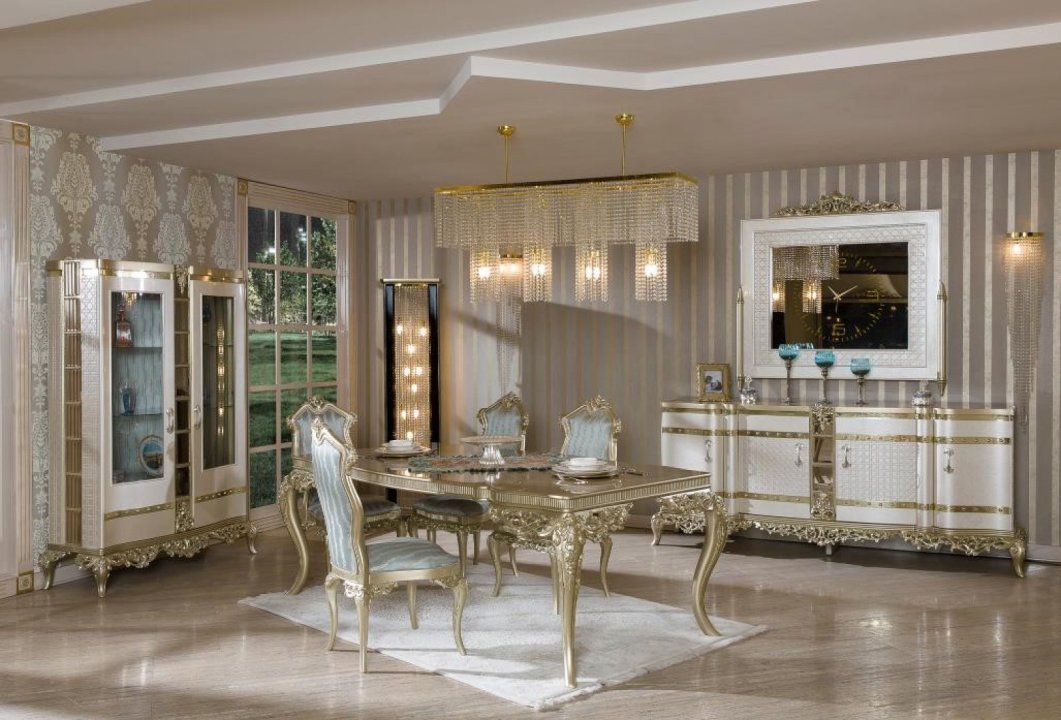
How Should Lighting Be Chosen for Luxury Dining Rooms?
Lighting in luxury dining rooms should be selected by considering the size and shape of the dining table, ceiling height, the colors and surface characteristics of the furniture, and the way the space is used. The right lighting does more than simply illuminate the table; it also helps materials such as wood, lacquer, metal, glass, and fabric appear more balanced. Especially in detailed dining room settings, planning chandelier size, light color temperature, and supporting light sources together can provide both sufficient visibility during meals and a controlled atmosphere.
Why Is Lighting Important in a Luxury Dining Room?
Since the dining table is usually the central element of the room, lighting naturally tends to focus on this area. However, relying on a single strong light source above the table may leave the rest of the room too dark.
Luxury dining rooms may include large pieces such as tables, chairs, and consoles, as well as wood textures, glossy surfaces, metallic details, and mirrors. The direction and intensity of light directly influence how these materials are perceived.
For this reason, dining room lighting should not be considered only as the choice of a chandelier. Main lighting, supporting lights, and decorative lighting should all be planned together.
How Should the Chandelier Above the Dining Table Be Chosen?
The chandelier is one of the most visible lighting elements in the dining area, so its size should be proportionate to the table.
Using a very small chandelier above a wide or long dining table may create a scale imbalance between the furniture and lighting. Likewise, an oversized chandelier above a small table can make the area feel unnecessarily crowded.
For rectangular tables, a linear pendant or several light sources aligned along the same axis may work well. For round tables, a circular or more compact chandelier centered above the table can support visual unity.
Should the Chandelier Be Positioned Exactly Above the Center of the Table?
In general, a chandelier centered over the dining table creates a more balanced appearance. The actual position of the table should be taken as the reference point rather than the geometric center of the room.
If the table is shifted toward a wall or console, leaving the chandelier only in the center of the ceiling can create misalignment between the table and the lighting.
For this reason, it is better to finalize furniture placement before planning electrical and lighting points. This is especially useful during a new interior design or architectural project.
How Should Chandelier Height Be Adjusted?
The chandelier should be positioned at a height that illuminates the table effectively without blocking the view of people sitting across from one another.
A large chandelier hung too low can obstruct eye contact. If it is placed too high, the visual relationship between the dining table and the lighting may become weaker.
Ceiling height, the physical dimensions of the chandelier, and the height of the table should all be considered together. Larger rooms with higher ceilings can accommodate longer pendant lights, while lower ceilings may require more compact designs.
How Should Light Color Be Chosen?
Warm or neutral white light generally complements wood, fabric, and warm color palettes in luxury dining rooms.
Warm light in the range of approximately 2700–3000K can create a more inviting atmosphere during evening meals. For interiors that require a more neutral appearance, lighting around 3000–3500K can be considered.
Very cool white light may make cream, beige, walnut, and brown tones appear harsher than they naturally are.
It is also important for the different light sources in the room to use similar color temperatures. If the chandelier is warm while wall lights are noticeably cool, the room may develop a fragmented lighting atmosphere.
Should Light Intensity Be Adjustable?
Because dining rooms may be used for different purposes at different times, dimmer systems that allow the light level to be adjusted can be useful.
Brighter lighting may be preferred for everyday family meals, while a lower light level may create a softer atmosphere during evening gatherings.
If a dimmer is used, the bulbs or LED systems must be compatible with dimming technology. The electrical infrastructure should also be planned accordingly.
What Does Layered Lighting Mean?
Layered lighting means using several light sources with different purposes rather than relying on a single source.
Three main lighting layers can be considered in a luxury dining room:
Main lighting: The chandelier or pendant above the dining table.
Supporting lighting: Wall sconces, spotlights, or ceiling lights.
Decorative lighting: Table lamps on the console, interior lighting in display cabinets, or low-intensity LED lighting that highlights furniture details.
With this approach, not only the dining table but also the console and surrounding furniture become part of the overall lighting composition.
How Should Lighting Be Used Around the Console?
The console is often the second important focal point in a dining room. If it features a mirror, vase, or decorative objects, controlled lighting can make the area more visible.
Wall sconces can be installed on both sides of the console. Alternatively, one or two decorative table lamps can be placed on top.
If there is a large mirror above the console, strong direct light should not reflect harshly on its surface. Softer light coming from the sides can illuminate both the mirror and decorative objects more evenly.
How Can Glare Be Prevented on Mirrors and Glossy Surfaces?
Luxury dining rooms may include mirrors, glass, glossy lacquer, or metallic surfaces. When light hits these materials at the wrong angle, uncomfortable glare can occur.
The positions of chandeliers, spotlights, and wall sconces should therefore be checked according to how they reflect on these surfaces.
Instead of pointing strong spotlights directly toward mirrors, lighting solutions that distribute light over a wider angle may be more suitable.
This helps keep furniture details visible while reducing distracting reflections.
What Type of Lighting Works Best with Wooden Furniture?
The grain pattern and depth of color in wooden furniture can appear different depending on the angle of the light.
Under warm or neutral lighting, walnut, brown, and natural wood tones may appear more balanced. Light coming from the side or at a slight angle can make the wood texture more visible.
However, excessively strong spotlights aimed at specific parts of the furniture may create noticeable color differences.
The goal is not to illuminate the furniture like a stage display, but to create balanced light distribution that reveals the natural qualities of the surface.
How Should Light Be Used with Metallic Details?
Gold, bronze, brass, and similar metallic details reflect light and can become prominent elements in a luxury dining room.
Instead of directing strong light straight at these surfaces, indirect lighting can create more controlled reflections.
For example, metallic details on table legs and metallic elements in the chandelier can visually connect with one another when seen under the same lighting conditions.
Does the Shape of the Dining Table Affect Lighting?
Yes. The form of the lighting can be related to the shape of the table.
For long rectangular tables, linear pendant lights or several fixtures placed side by side can distribute light evenly across the full length of the table.
For round tables, circular chandeliers that radiate from the center can create a more unified appearance.
For oval tables, both circular and horizontal lighting designs can be used. The main criterion is that light should reach most of the tabletop evenly.
Can Lighting Be Used to Define the Dining Area in an Open-Plan Space?
Yes. If the dining area and living room share the same space, lighting can be an effective way to create visual zoning.
A distinctive chandelier above the dining table visually defines the function of the area. A different ceiling light or floor lamp can then be used in the seating area to create separation.
However, the color temperatures of the different light sources should not be completely unrelated. Using lighting that creates a consistent overall atmosphere generally produces a more balanced result.
Can Lighting Be Used Inside Display Cabinets and Glass Cabinets?
If the dining room includes a display cabinet or glass-front storage unit, low-intensity interior lighting can be used.
Objects or dinnerware displayed on glass shelves can become more visible with this type of lighting.
However, display cabinet lighting should not be as strong as the main room lighting. It should be used as a supportive decorative layer rather than a functional primary light source.
Keeping cables and LED sources hidden also helps the furniture maintain a cleaner appearance.
Does Natural Light Affect the Lighting Plan?
The position of windows and the amount of daylight entering the dining area affect the need for artificial lighting.
Dining rooms that receive plenty of natural light may require less decorative lighting during the daytime. In spaces used mainly in the evening, however, the artificial lighting plan becomes much more important.
Curtains also play a role. Heavy curtains may significantly reduce natural light, while more translucent fabrics can help the room remain brighter throughout the day.
 ARA
ARA
 CANLI DESTEK
 HARİTA