
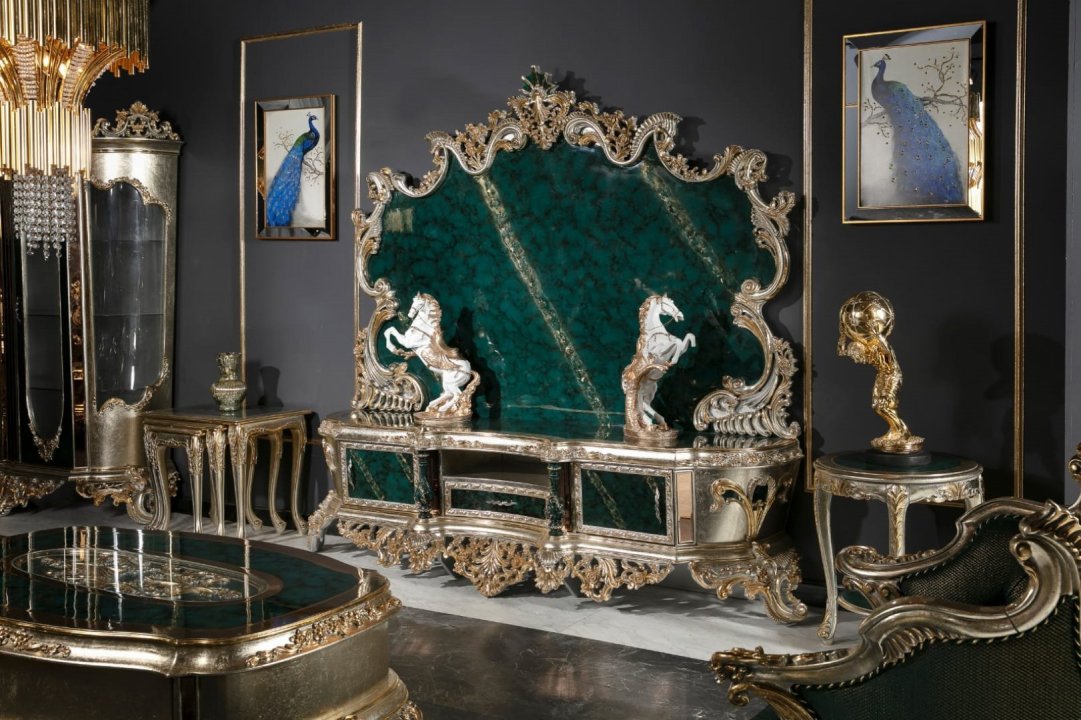
Organizing the Living Room with Classic Furniture TV Unit Models
Classic furniture TV unit models provide an organized area for televisions and electronic devices while completing a classical living room interior. When planning a TV unit, television dimensions, viewing distance, storage requirements, cable management and the amount of space occupied by the furniture should be evaluated together. Decorative appearance is important, but safe television placement and convenient access to electronic devices should remain priorities.
Sarıçam Furniture’s classic TV unit models include compact television stands as well as larger wall-unit arrangements. The website features different models, including İmparator, Payitaht, Volgograd, Perla and Huzur. Since the dimensions and component arrangements vary, the characteristics of the room should be considered before choosing a model.
What Function Does a Classic TV Unit Serve?
A TV unit is more than a piece of furniture that supports a television. It can provide an organized area for satellite receivers, game consoles, sound systems, remote controls and other electronic equipment. Drawers and closed compartments can also be used to store cables, manuals and smaller accessories.
Classic TV units may feature wooden surfaces, decorative legs, carved details and framed cabinet doors. These characteristics can make the unit one of the most noticeable pieces in the living room. Its decorative intensity should nevertheless remain balanced with the sofa set and surrounding furniture.
A wall unit that covers a large section of the wall may look proportional in a spacious living room. In a smaller room, the same model can restrict movement and make the interior feel narrower. The design should therefore be evaluated in relation to both the wall dimensions and the total size of the room.
Coordinating Television and TV Unit Dimensions
The television’s screen size should be evaluated together with the width and height of the TV unit. If the television will stand on the unit, its feet must rest securely on the surface with sufficient space around the edges.
If the television will be mounted on the wall, the unit should be positioned according to the center of the screen. Installing the screen too high can affect neck and viewing comfort during extended use. Seating height, viewing distance and screen position should be considered together.
If a new television may be purchased in the future, selecting a unit based only on the current screen can be limiting. The total width of the furniture and available wall space can be planned with a possible larger television in mind.
The Sarıçam Furniture website states that classic TV units can be produced in different sizes and colors according to the television model. However, the availability of custom dimensions and colors should be confirmed separately for the selected product.
Television Stand or Full Wall Unit?
Television stands occupy less space and may be particularly practical in small or medium-sized living rooms. They are generally suitable for a television, media devices and limited storage requirements.
Wall units may include shelves, display cabinets, storage cupboards and decorative side sections in addition to the main television stand. They can create a more complete appearance on a wide wall and provide additional storage. However, every component should have a practical purpose. Adding unnecessary cabinets merely to fill an empty wall can restrict the room.
The following questions can help determine the appropriate format:
- What are the dimensions of the television?
- How many electronic devices will be used?
- Is closed storage required?
- Are open shelves needed for decorative accessories?
- How wide is the wall?
- Where is the room’s main circulation route?
- Will the television stand on the unit or be mounted on the wall?
The answers can help establish whether a compact television stand or a larger wall unit is more suitable.
Storage in Classic Furniture TV Unit Models
When examining classic furniture TV unit models, storage should be planned according to the items that will actually be kept inside. Drawers may be useful for remote controls and small accessories, open compartments for electronic devices, and closed cupboards for cables and less frequently used items.
Compartments for electronic devices must provide sufficient width and depth. Air should circulate around the equipment, and ventilation openings should not be blocked. Devices placed inside closed cupboards may require additional ventilation to prevent overheating.
It is also important to determine whether remote-controlled equipment can function behind cabinet doors. A door that blocks the signal can make everyday use inconvenient.
Open shelves may display books, vases and small accessories, but filling every shelf can create visual clutter. Leaving clear space around the television usually provides a more balanced appearance.
How Should Cables Be Organized?
A TV unit may accommodate a television, satellite receiver, modem, sound system and game console. Without suitable cable passages, the area behind the furniture can become disorganized and difficult to access.
The locations of electrical sockets and internet connections should be checked before the unit is installed. Access can become difficult if the sockets are completely hidden behind the furniture. Cable openings and rear access points in the device compartments should be examined.
Cables must not be compressed, come into contact with heat sources or cross walking areas. If extension leads or multi-socket adapters are required, their capacity and safety requirements should be considered.
When the television is wall-mounted, the cable-concealment method should be planned before installation. In-wall applications or cable channels may require technical assistance. Unsafe temporary solutions should not be used for electrical connections.
How Should Wooden Craftsmanship and Surfaces Be Examined?
Sarıçam Furniture emphasizes natural wood and handcraftsmanship in its classic TV units. Customers should examine the continuity of carved details, surface finish, connection points and the balance of the furniture legs.
Drawers and cabinet doors should be opened and closed several times. The rails should move without sticking, hinges should operate evenly, and handles should be fitted securely.
Painted, polished or gilded surfaces should be checked for swelling, cracks and noticeable differences in tone. Small variations may occur on handcrafted surfaces. Customers can ask whether such differences result from the production method or represent a defect.
The top surface of the unit must be able to support the television and other devices. Information about weight capacity, wall anchoring and installation requirements should be requested before ordering.
Coordinating the TV Unit with a Classic Sofa Set
As one of the main pieces in a living room, the TV unit should have a visual connection with the sofa set. Wood tones, the amount of carving, leg shapes and metal details can be evaluated together.
Sarıçam Furniture’s classic sofa sets include options that support a similar decorative approach. However, every piece does not need to come from the same collection or use exactly the same color.
If the sofa set includes prominent patterns and strong upholstery colors, a TV unit with a more restrained surface can balance the room. If the sofa design is simpler, a unit with noticeable carved and decorative details may serve as a focal point.
The amount of sunlight reflected on the screen should also be checked when determining the seating position. Reflections from windows can affect viewing quality. Curtains and furniture placement may need to be adjusted according to the position of the television.
Creating Harmony with Coffee Tables and Accessories
The TV unit and coffee table are two prominent surfaces positioned opposite each other. Similar wood undertones and complementary decorative details can make the room appear more organized.
Sarıçam Furniture’s coffee tables and accessories can be evaluated together with the TV unit. The table and unit do not need to match exactly. Similar leg forms, wood tones or metal details can create sufficient continuity.
Using too many accessories on the TV unit can make the area around the screen look crowded. A few books, a small object or a carefully sized vase may be enough. Tall decorative items should not obstruct the view of the screen.
When accessories are placed on open shelves, they should not block the ventilation of electronic equipment. Leaving some shelves empty generally provides a more balanced arrangement.
Using a Classic TV Unit in a Small Living Room
In a small living room, a compact television stand may be more practical than a large wall unit. Closed storage can conceal small items and make the room appear more organized.
Light-colored surfaces may help a limited space feel more open. Nevertheless, the unit’s color should be assessed together with the walls, flooring, sofa and curtains.
There must be sufficient space in front of the unit. Drawers and cabinet doors should not hit the coffee table or other furniture when opened. Their movement area should be included in the room plan before ordering.
If upper wall modules will be used, the ceiling height and wall construction must be checked. Wall-mounted components need to be installed securely.
Designing a Television Wall in a Large Living Room
A spacious living room may accommodate a complete television wall consisting of a main stand, side cupboards, shelves and decorative panels. However, every component should have a clear purpose.
Even when the wall is wide, it does not need to be entirely covered with cupboards. Leaving clear space around the screen can help both the television and furniture look more balanced.
Wall units may use different heights. Lower modules can provide storage, while upper or side shelves may display accessories. The proportions and alignment of the modules should be checked on a drawing before installation.
In open-plan homes where the living and dining areas share one space, the TV unit can be coordinated with classic dining room sets. Complementary wood tones on the dining table, sideboard and TV unit can create continuity throughout the shared area.
Researching Classic TV Units in Istanbul and Other Major Cities
Customers looking for classic TV units in Istanbul, Ankara, Izmir, Bursa and Antalya should evaluate the television dimensions, living room plan and delivery route in advance. Large wall-unit components must be able to pass through building entrances, lifts and stairways.
Customers in Istanbul can visit Sarıçam Furniture’s showrooms in Masko Furniture City. Examining the products in person makes it easier to assess surface finishes, actual colors, drawer arrangements and decorative details.
Customers researching products from Ankara, Izmir, Bursa or Antalya should confirm product dimensions, packaging, delivery coverage and installation conditions before ordering. Delivery or installation in these cities should not be assumed; current conditions should be obtained directly from Sarıçam Furniture.
What Should Be Checked During Ordering and Installation?
The order form should clearly state the product model, dimensions of every component, color, surface treatment and drawer or cabinet arrangement. Requests for custom colors or measurements should also be recorded in writing.
The following points should be checked during installation:
- The unit stands evenly on the floor.
- Wall-mounted components are securely fixed.
- Drawers and cabinet doors operate properly.
- Cable passages are suitable for the devices.
- Glass or mirrored sections are undamaged.
- The television space matches the screen dimensions.
- Electronic devices have sufficient ventilation.
- The product matches the ordered measurements and colors.
The television and electronic devices can be positioned after installation has been completed. Heavy equipment should not be placed on the unit before its weight capacity and anchoring requirements have been confirmed.
A Short Summary of Classic Furniture TV Unit Models
When choosing classic furniture TV unit models, television dimensions, viewing distance, room size and storage requirements should be assessed together. Drawers and device compartments need to support everyday use, while cable management and ventilation should be planned in advance.
A properly sized TV unit that supports the television securely and coordinates with the surrounding furniture creates a more organized viewing area. Connections, surfaces, hardware and installation safety should receive as much attention as the decorative craftsmanship.
Frequently Asked Questions
How much wider should a TV unit be than the television?
The appropriate width depends on the television’s feet and the design of the furniture. If the television will stand on the unit, its feet must rest fully on the surface with sufficient space around the edges.
Can a classic TV unit be used in a small living room?
Yes. Models with controlled dimensions, no unnecessary side modules and sufficient storage can be used in smaller rooms.
Should the television be wall-mounted or placed on the unit?
Both options are possible. The wall construction, television weight, viewing height and furniture’s weight capacity should be considered.
Should the classic TV unit and sofa set be the same color?
No. An exact color match is not necessary. Harmony between wood undertones, leg shapes and decorative details is sufficient.
Are open shelves or closed cupboards more practical?
Open shelves can provide access and ventilation for electronic devices. Closed cupboards conceal smaller items. Both can be combined according to the user’s needs.
Can a classic TV unit be produced in custom dimensions?
The website states that different dimensions and colors may be available. However, custom-production options and applicable measurements should be confirmed with the store for the selected model.
 ARA
ARA
 CANLI DESTEK
 HARİTA